By
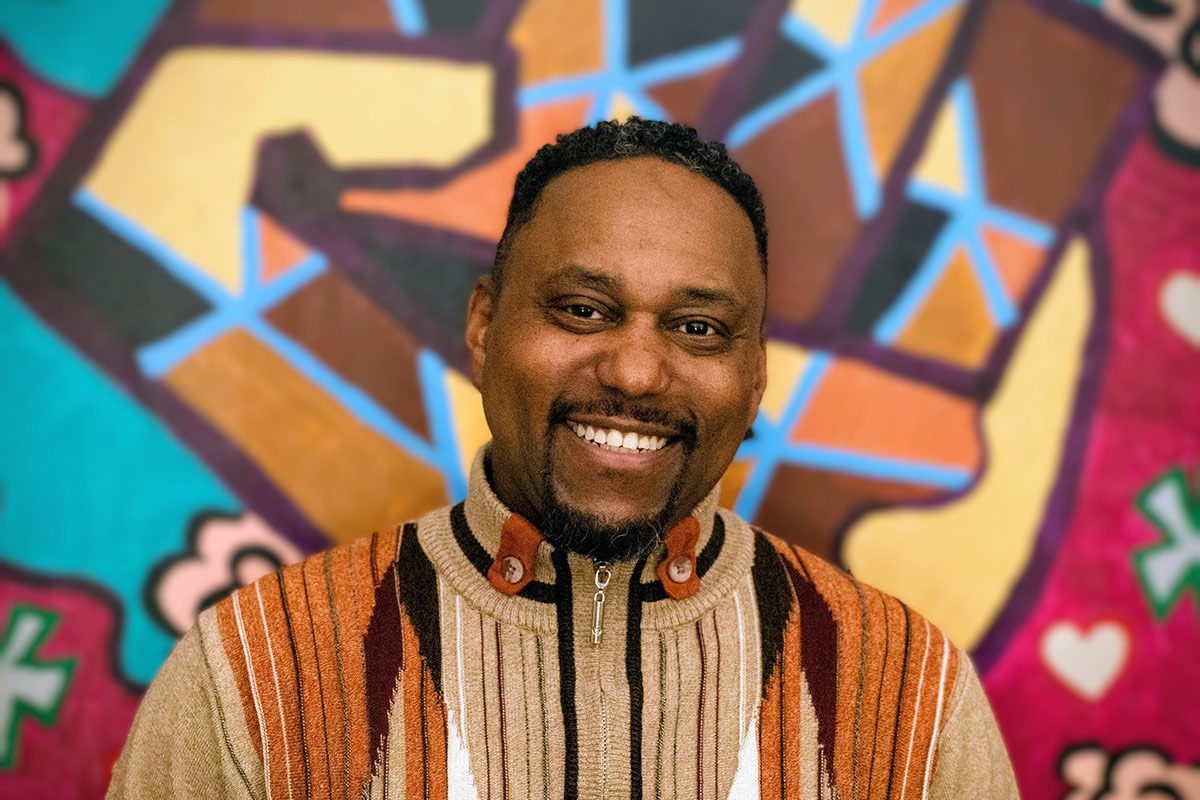
Ken Whittaker’s life has been one of regular reinvention. Computer engineer. Campaign coordinator. Legislative aide. Executive director of one of Michigan’s largest social justice nonprofits. Each chapter built upon the last. However, there was one missing piece that would complete his works: college.
“I went to college right out of high school because that was the next step you’re supposed to take,” Whittaker said. “I really didn’t have a purpose for college, and I didn’t have the discipline for it at that time, either. I just did it because I felt like I was supposed to.”
To no one’s surprise, that first attempt didn’t take. Neither did the four that followed over the next three decades. But in 2024, after losing his grandmother, for whom he had been the primary caregiver during the previous 20 years, Whittaker felt he needed to move toward something new. And having lost his mother 20 years earlier, the grief of those combined losses left him struggling to find a baseline.
“I remembered how I felt after my mother died, how I kind of spiraled out, and I didn’t want to do that again, so I decided I had to do something with the time,” Whittaker said. “I needed to do something with that energy. So I just completely replaced caregiving with school.”
His wife, Shanay, found UM-Flint’s Accelerated Online Degree Completion program and encouraged him to explore further. Now, he is finishing a Bachelor of Interdisciplinary Studies degree, has been named a Maize and Blue Distinguished Scholar, and is the featured commencement speaker at the College of Arts, Sciences & Education ceremony on May 3.
“I did not come back to school thinking about accolades,” he said. “I was just trying to fill a hole in my life. The goal was to get a degree. A 4.0 GPA and making the Dean’s List were not.”
Whittaker grew up in Detroit and graduated from high school in 1993. His first attempt at college was on a full baseball scholarship to Alabama State University, but he transferred to Central Michigan University to be closer to his mother after she had a heart attack. He got married, started a family, and then left school. What followed was a career built entirely on self-taught skill and sheer persistence. He read Microsoft certification books cover to cover and took the exams. He started a home computer repair business, then talked his way into a computer engineering position at Detroit-based CompuWare — conducting the final interview while cooking dinner, bathing his kids, and putting them to bed.
“The engineer who was interviewing me said, ‘If you just did all of that while answering all of my questions, you’re hired,'” Whittaker said with a laugh.
From there, he moved to a computer support role at the University of Michigan Medical School, before pivoting into politics — running campaigns, working as a legislative assistant in the Michigan House of Representatives, and eventually landing at Michigan United, an organization dedicated to immigration reform, environmentalism, criminal justice advocacy and civic engagement. He started volunteering at the nonprofit 14 years ago and now serves as its executive director.
“I’ve reinvented myself several times, in multiple career tracks,” he said. “I’ve carried what I’ve learned from each part to the next. This academic journey has honestly matched the labor and career journey that I’ve had. Interdisciplinary studies means a lot more to me than it did when I started — it’s the academic twin of my work life.”
Though Whittaker’s return to college began with the lone goal of earning a degree, earning A’s in his first two classes and learning about the Maize & Blue Distinguished Scholar award changed things for the adult learner. The Maize & Blue Award is UM-Flint’s highest academic honor bestowed on undergraduate students. Whittaker let his instructors and peers know what his goals were at the beginning of each course.
“I’d say that I’m going to graduate in May 2026, I want to be a Maize and Blue Distinguished Scholar, I want a 4.0 GPA, I want to be summa cum laude — I would say that in every introduction for every class,” he said. “And then I made a plan for it. Of course, I continued with my community work, and I kind of became a de facto dad-advisor for all of my classmates, whether it be during regular hours, or if it’s 2 a.m., or even tutoring somebody in math while walking through the airport — and almost missing the plane.”
Two professors shaped Whittaker’s experience in lasting ways.
Elizabeth Cameron, a lecturer in the School of Management, provided him with practical knowledge he could utilize in his career. “It gave me an opportunity to not just learn theory, but practice it at the same time,” Whittaker said. “What she didn’t know was that some of the questions I was asking her were solving issues I was dealing with that day at work. One time it was about the intrinsic motivations of my staff — not just giving them an order, but helping them buy into what I want them to do, making it feel like their choice.”
A business communications course with James Schirmer, an associate professor of English, had a similar effect. “Every memo I wrote for class was an actual memo that I turned around and sent to my staff,” Whittaker said. “I would use what I was dealing with at work as the canvas, get my grade and his feedback to make sure I was doing it the right way, and then deliver it to my staff.”
But it was the classes he resisted that taught him the most.
He didn’t want to take theatre or read “Oedipus Rex.” Yet he ended up writing several pages for a discussion post that asked for a few paragraphs. “The professor said, ‘Ken, you kind of did way too much, but I couldn’t stop reading,'” Whittaker said. A visual storytelling course rewired his thinking about communication entirely. “To think about sequencing and presentation and framing — telling a story without words being just as strong as telling a story with words — changed how I communicate at work and how I’m now teaching my staff to communicate.”
Completing his degree has done something Whittaker didn’t fully anticipate: it answered questions he had been carrying for decades.
“It’s given me confidence that I didn’t realize I’d lost or lacked,” he said. “I didn’t realize the script I’d mentally written about dropping out of college the first few times that I then carried through the rest of my life. I didn’t realize that feeling like I wasn’t enough related back to my academic failure. Having started this journey, not only finishing it but adding goal after goal along the way and reaching them, I have a new level of confidence. I’m answering questions that I had of myself 15 years ago: ‘Am I enough? How can I recover from failures?’ I’ve answered those questions throughout this academic journey.”
He has already identified his next destination: the University of Detroit-Mercy Law School, where he plans to study election law and nonprofit compliance. He has begun reaching out to attorneys in his network for mentorship.
“We all didn’t arrive here the same way, but we’re leaving here together,” he said. “Every victory, every struggle, every tear that we’ve cried — every A, every C — all of it shaped who we are and who we’re walking into this world as. So the world’s about to find out what a University of Michigan-Flint graduate can do.”